

Cabbage has always been a staple in our kitchens: easy to prepare, economical, and packed with nutrients. Yet, behind its nourishing green leaves lies a lesser-known reality: for some, eating it can be risky. But who are these people? And more importantly, why can this popular vegetable become problematic? Sit back, the answer might surprise you…
Why is cabbage so popular in France?

Cabbage is a bit like a baguette for the French: a daily staple. Rich in vitamins A, P, C, E, and B, it acts as a real asset to strengthen our blood vessels, support our nervous system, and boost our metabolism. Low in calories, it’s also the perfect ally for those who want to stay in shape without depriving themselves.
With him, winter seems less harsh, as his comforting soups warm the heart. But beware, even the best allies have their limits…
Who should limit or avoid cabbage consumption?
People with thyroid disorders
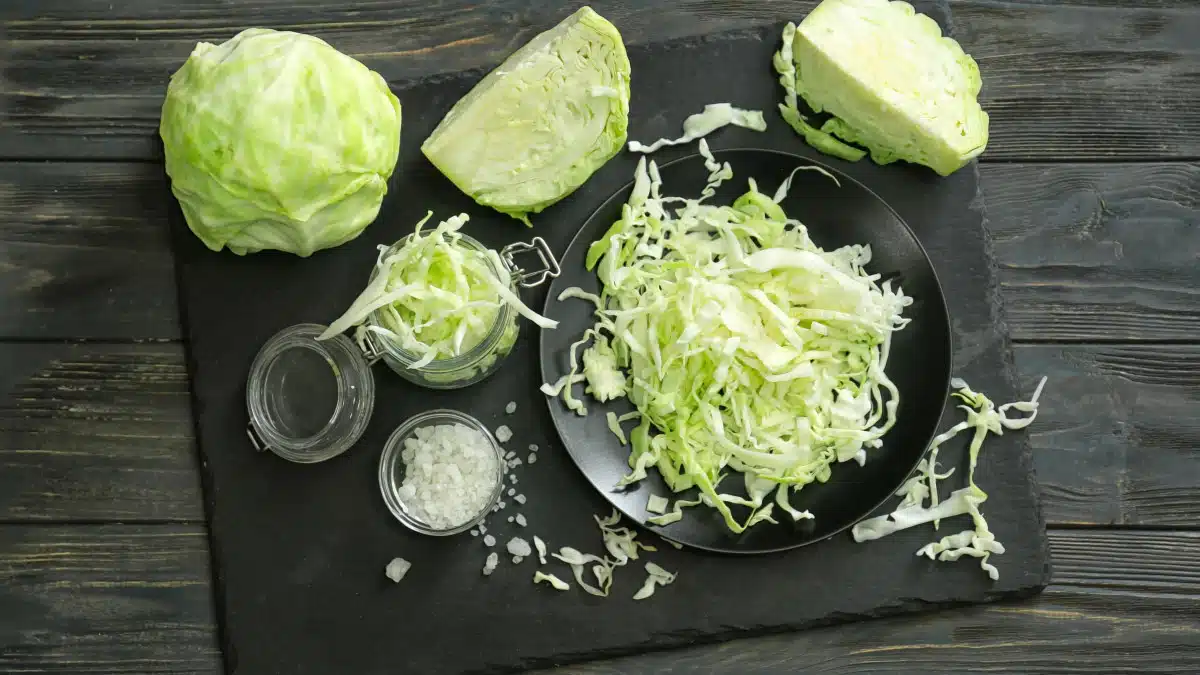 Think of your thyroid as a conductor, harmoniously regulating all vital functions. The problem is that cabbage contains goitrin , a substance that can disrupt this harmony by causing the gland to swell.People with goiter or thyroid dysfunction should therefore remain vigilant. In case of an irresistible urge, it is recommended to immerse the cabbage leaves in salt water for 10 to 15 minutes , then chop them finely before eating them. This small gesture can significantly reduce the presence of goitrin.
Those with fragile digestion

If we compare our intestines to a national highway, cabbage is a kind of « bulldozer » : effective at clearing the way in cases of constipation thanks to its fiber. But for an already weakened digestive system (diarrhea, sensitive intestines), this bulldozer becomes an uncontrollable steamroller, aggravating the problems.
If you have difficulty digesting, it is better to skip this and opt for milder vegetables such as cooked carrots or steamed courgettes .
People prone to allergies or eye bleeding
When we think of allergies, we often imagine spring and its trail of pollen. However, eating cabbage, especially pickled cabbage, can also cause unexpected reactions: itching, watery eyes, runny nose, etc.
This is due to the histamine naturally present in this vegetable, which is like an uninvited guest who shows up unannounced at the party. So, if you have an allergic reaction or subconjunctival hemorrhage (a small red spot in the eye), it’s best to avoid cabbage altogether.
Those with kidney problems

Could cabbage be the equivalent of a trap on your plate? Yes, especially for the kidneys! This vegetable contains oxalic acid , which can combine with calcium, iron, and magnesium to form crystals: the infamous kidney stones.
People suffering from kidney failure or a history of kidney stones should therefore consult their doctor before eating coleslaw. To limit the risks, here’s a simple tip: cut the cabbage into small pieces and cook it well, like a good winter stew simmered for a long time .
Cabbage is a true treasure of nature, but it’s not without its drawbacks. For some, it’s better to know how to measure or prepare this vegetable carefully to enjoy its benefits without risking health risks.
As always, the key lies in balance and listening to your own body. So, are you ready to enjoy your next plate of cabbage with full awareness?


.jpg)


0 comments:
Post a Comment